
Guide
How to start bug bounty from scratch
A practical roadmap: what to learn, where to sign up, how to choose programs and how to prove your progress so it counts.

1. Build a technical foundation before hunting
Bug bounty rewards understanding how applications break. Before diving in, spend time on the fundamentals of web security: the HTTP model, cookies and sessions, authentication and authorization, APIs, and the OWASP Top 10 vulnerabilities (IDOR, XSS, SSRF, injections, broken access control).
Practice in legal environments: HackTheBox machines, web labs and CTFs. Everything you solve trains your eye for the real world.
2. Specialize in one type of vulnerability
Trying to find "everything" at the start scatters your focus. Choose one class of flaw (for example IDOR/access control, or SSRF, or business logic flaws) and get good at detecting it. Specialization dramatically speeds up your first valid report.
3. Sign up on the platforms and choose a program
- Create an account on HackerOne, Bugcrowd and YesWeHack.
- Start with public programs with a broad scope (including VDPs to gain mileage).
- Read the scope and rules carefully before testing anything — always respect them.
- Prioritize under-explored surface: subdomains, new features, integrations.
4. Report well and learn from every attempt
A good report explains the impact, the steps to reproduce it and a clear proof of concept. Duplicates and "informative" reports are part of the game: do not get discouraged, each attempt sharpens your judgment. Consistency is what separates someone who finds their first critical from someone who gives up.
5. Prove your progress from day one
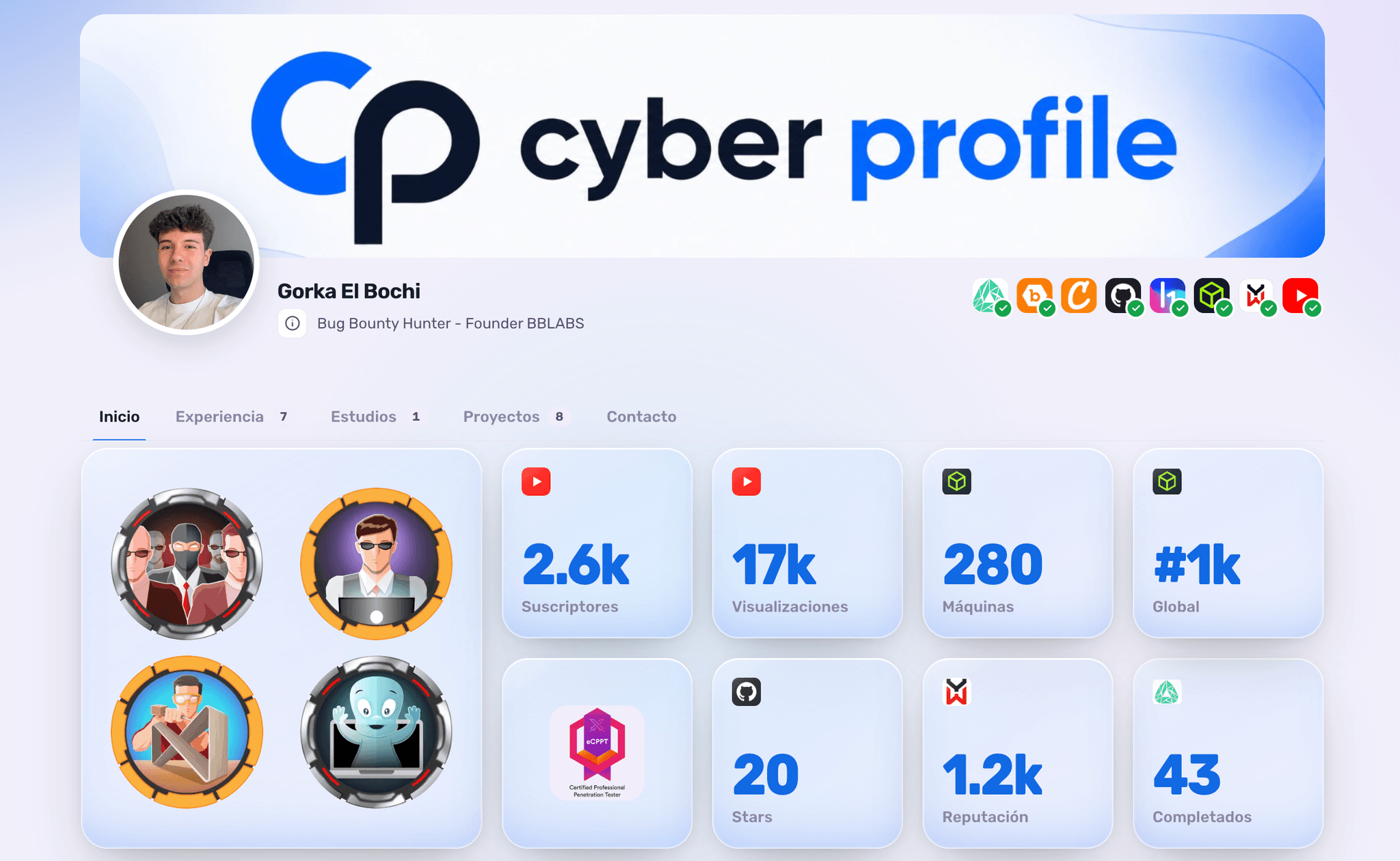
As you gain reputation and impact, those results are your best calling card — both for private programs and for landing a job. Instead of sending scattered screenshots, gather your reputation from HackerOne, Bugcrowd and YesWeHack into a verified profile with a single link. CyberProfile does it automatically and keeps it up to date.
Your progress, verified
Turn your reports into opportunities
Every reputation point is public proof of your impact. CyberProfile gathers them verified on a professional page you can show to private programs and to companies that hire.
- Reputation and impact verified at the source
- HackerOne, Bugcrowd and YesWeHack in one link
- Updates itself with every report
Start building your bug bounty profile
Free. Verified at the source. No credit card.
Frequently asked questions
How long does it take to find the first bug?
It depends on your consistency and technical foundation, but it is normal to take weeks or months for the first valid report. The key is to choose programs with a good attack surface, specialize in one type of vulnerability and not give up after the first duplicates or "informative" reports.
Do I need to know how to code to do bug bounty?
It helps a lot, especially understanding how applications work (HTTP, authentication, APIs) and some scripting. You do not need to be a senior developer, but the better you understand the technology, the easier it is to find flaws that others overlook.
Which bug bounty platform is best to start with?
HackerOne and Bugcrowd have many programs and good documentation; YesWeHack is strong in Europe. Start with public programs with a broad scope (VDP or paid) and move up as you gain experience.
How do I prove my bug bounty progress?
With a profile that gathers your verified reputation and impact. CyberProfile imports your stats from HackerOne, Bugcrowd and YesWeHack into a verified public page, ideal for showing your growth and landing opportunities.
Build your bug bounty profile free
Start proving your progress from the first report.
- Free forever
- No credit card
- Ready in 60s
- Verified at the source