
Cybersecurity portfolio examples
Cybersecurity portfolio examples
What makes a portfolio good, with real examples by role — bug hunter, pentester, student, blue team — and public profiles you can visit right now.
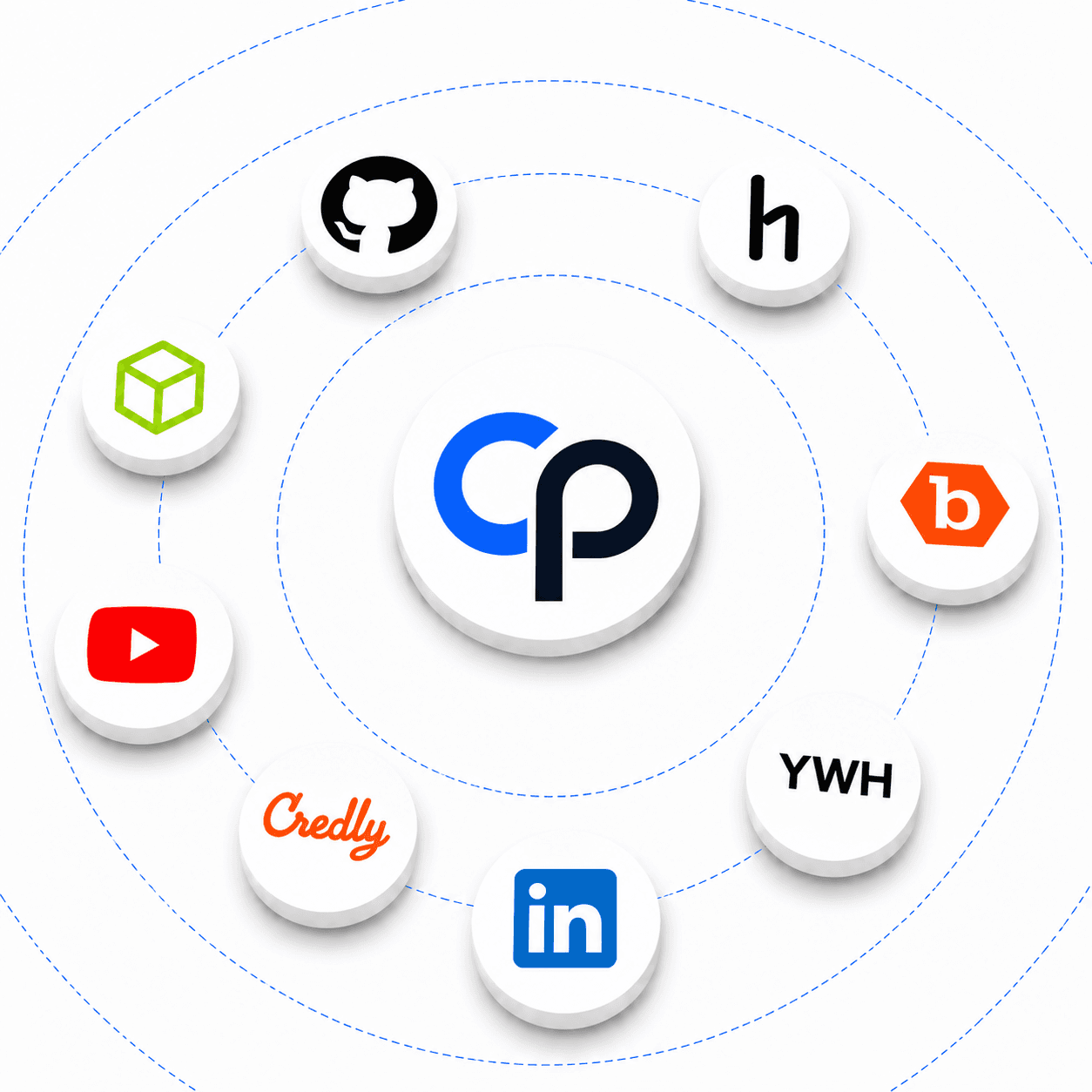
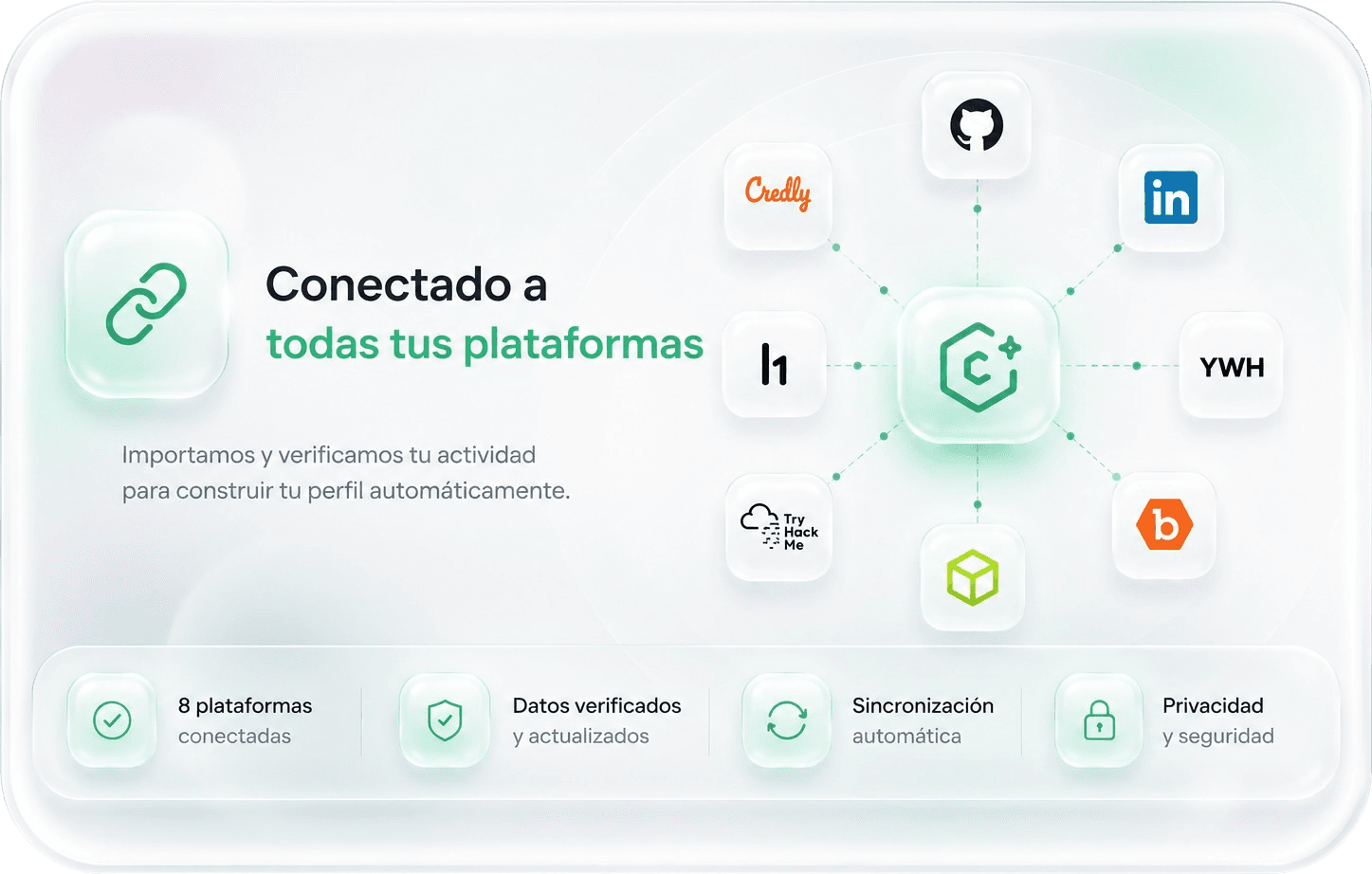
Conecta las plataformas que ya usas
 HackTheBox
 HackerOne
 Bugcrowd
 YesWeHack
 GitHub
 Credly
 LinkedIn
 YouTube
 BBLabs
 DockerLabs
 The Hackers Labs
 El Rincón del Hacker
 ThePwnLab
Examples by role
There is no single mold: each profile highlights its own strengths
A bug hunter shows reports and reputation; a pentester, their HackTheBox rank and writeups; a student, their labs and first certifications. The good examples share one thing: they show proof, not promises.
CyberProfile lets you order, pin and highlight exactly what matters most in your case, without starting from a generic template.
- Bug hunter: valid reports, reputation and impact
- Pentester: HackTheBox rank and machines, certifications
- Student and blue team: labs, CTFs and defensive certifications
Anatomy of a good portfolio
The pieces that separate a great example from the rest
A clear header with your role, verified stats from each platform, checkable certifications, projects with context and a way to reach you. Every block links to its source, so the recruiter trusts without having to take your word for it.
- Data verified at the source — impossible to fake
- Visual hierarchy: what matters, on top and highlighted
- A single public link, always up to date
On video
From zero to an example like these in a minute
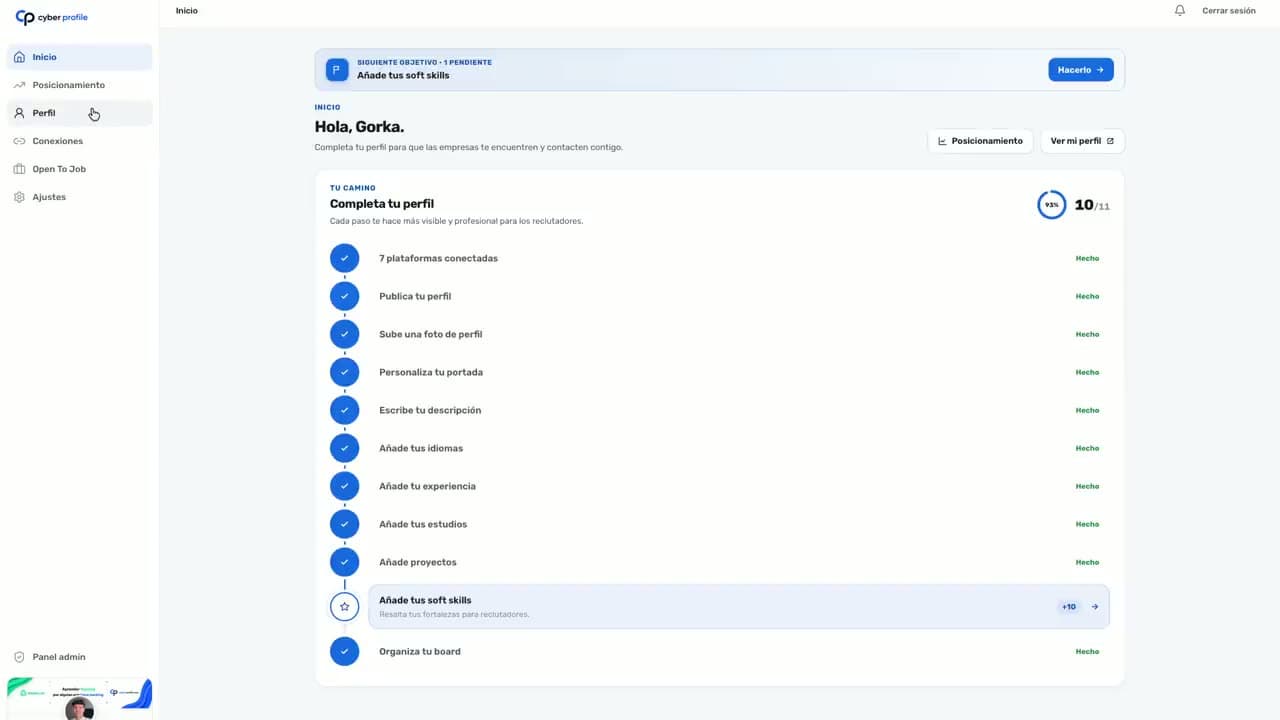
Connect your accounts and personalize your portfolio by dragging blocks. No design or coding.
Like the examples? Build yours
Free forever. No credit card.
What makes a good cybersecurity portfolio?
The short answer: evidence. The best cybersecurity portfolio examples do not describe skills, they prove them with checkable facts — machines solved, accepted reports, verified certifications, real repositories — each one linked to its source platform.
Add readability to that: a recruiter spends seconds on a first glance, so what matters most must be on top and highlighted, with no noise or filler.
What do the examples look like based on your role?
Not all portfolios look the same, and that is an advantage. These are the signals that matter most for each focus:
- Bug hunter: valid reports, reputation and impact on HackerOne, Bugcrowd or YesWeHack. A single critical report says more than any summary.
- Pentester / red team: HackTheBox rank and machines, writeups, practical certifications (OSCP, CPTS) and tools published on GitHub.
- Student or newcomer: labs and CTFs completed, progress on learning platforms and your first certifications. Everything counts from day one.
- Blue team / defensive: defensive certifications, detection or forensics projects and security-focused contributions on GitHub.
Where can I see real examples?
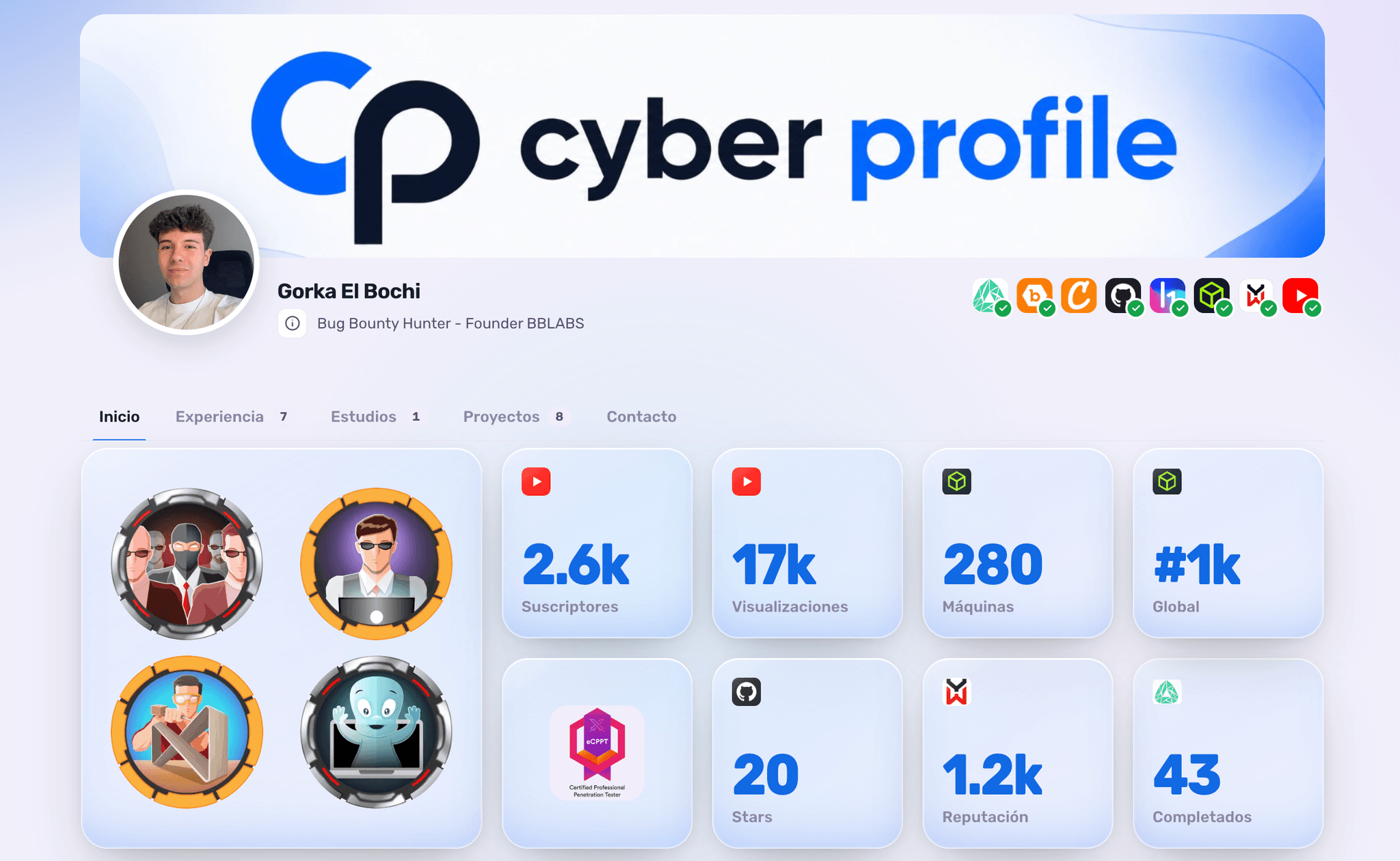
On CyberProfile every profile is public and lives at cyber-profile.com/u/your-name, so the examples are not mockups: they are real people. As a starting point, visit cyber-profile.com/u/gorkabochi and see how stats, reports, certifications and projects fit together on the same verified page.
Notice how each data point links to its source. That is the detail that makes a portfolio credible: you do not have to trust it, you can check it.
What should you avoid in a cybersecurity portfolio?
Weak examples tend to share the same mistakes. These are the ones that hurt most:
- Claims with no proof ("pentesting expert") that nobody can verify.
- Endless lists of technologies with no context or real impact.
- Data that ages: a PDF or a static site that no longer reflects your current level.
- Cluttered design that buries what matters under animations and filler.
How do I build a portfolio like these examples?
- Create your free account (email or Google) — no credit card.
- Connect the platforms you already use: HackTheBox, DockerLabs, HackerOne, Bugcrowd, YesWeHack, GitHub, Credly, LinkedIn, YouTube and BugBountyLabs.
- CyberProfile imports and verifies your achievements and builds your profile automatically.
- Choose what to highlight and share your public link (cyber-profile.com/u/your-name).
Frequently asked questions
Can I see real cybersecurity portfolio examples?
Yes. Every CyberProfile is public and lives at cyber-profile.com/u/your-name, so you can browse real examples from real people. As a reference, take a look at cyber-profile.com/u/gorkabochi: you will see how HackTheBox stats, bug bounty reports, certifications and projects come together on a single verified page.
What makes a good cybersecurity portfolio?
Showing evidence instead of claims: machines and CTFs solved, accepted reports, verified certifications and real repositories, each one checkable at its source platform. A good portfolio prioritizes impact over keywords and is easy to skim for a busy recruiter.
What should my portfolio include based on my role?
It depends on your focus: a bug hunter highlights valid reports and reputation (HackerOne, Bugcrowd, YesWeHack); a pentester, their HackTheBox rank and machines plus practical certifications; a student, their completed labs and CTFs; and a blue team profile, defensive certifications and projects. CyberProfile lets you highlight exactly what matters most in your case.
Do I need work experience to have a good portfolio?
No. In cybersecurity, a single critical report, a hard machine or a well-solved lab weighs more than a generic job title. Many of the best examples come from people with no formal experience: what convinces is technical evidence, not seniority.
How do I build a portfolio like these examples?
Create your free account, connect your platforms (HackTheBox, HackerOne, GitHub, Credly…) and CyberProfile imports and verifies your achievements to build the profile automatically. In a minute you have a public link ready to share — no design or coding.
Your cybersecurity portfolio, like the best examples
Connect your platforms and have a verified profile in 60 seconds.
- Free forever
- No credit card
- Ready in 60s
- Verified at the source